Attracting Backyard Birds: Native-Plant Strategy vs. Feeder-Centric Strategy
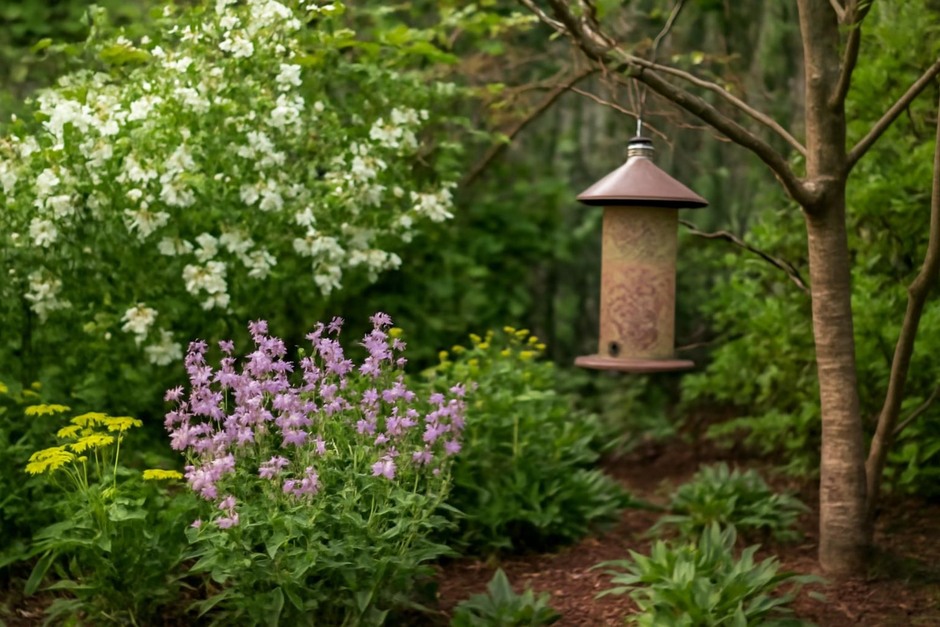
If you want more birds around your home, two clear strategies tend to work: shape the landscape to provide food and shelter year-round, or offer concentrated food and water through feeders and baths. Both draw birds, but they support different behaviors and require different commitments. Below I compare the two approaches and offer a short field-guide to help you choose—or blend—them based on your space, time, and what you most want to notice.
Approach A: The Native-Plant Habitat
This approach focuses on planting locally native trees, shrubs, grasses and perennials that provide natural food (seeds, berries, and insects), shelter, and nesting sites across seasons.
- What it looks like: A mix of structural layers—small trees, mid-height shrubs, dense native grasses, and flowering perennials—left with some seed heads in winter.
- Benefits: Supports a wider range of species and life stages (nesting and young), encourages insect life that many birds feed on, and creates a lower-maintenance rhythm once established.
- Trade-offs: Takes time to establish (months to years), requires plant selection suited to your region, and can require more space than a feeder setup.
- What to plant: Choose regionally native shrubs that produce berries, trees that offer shelter and insects, and seed-producing perennials. Include a mix of early- and late-season bloomers to support insects and pollinators.
- Observation notes: You’ll likely see more breeding behavior, visits by insectivores, and seasonal shifts—warblers in migration, finches in seed season, thrushes in leaf litter.
Approach B: The Feeder-Centric Setup
This approach concentrates resources: feeders with seed mixes, suet, or nectar, a reliable water source, and simple perching and shelter nearby.
- What it looks like: A few well-placed feeders, a bird bath (heated if you live where water freezes), and perhaps a small evergreen or sheltering shrub within flight distance.
- Benefits: Quick results—birds often find new feeders within days—great for small spaces or urban yards, and excellent for steady year-round observation.
- Trade-offs: Requires regular maintenance (refilling, cleaning), can attract fewer species overall, and may concentrate birds in one spot which can increase disease transmission if not maintained.
- Typical gear: Tube feeders for seed-eaters, platform feeders for mixed diets, suet cages for insect-eaters in cold months, and nectar feeders for hummingbirds where they occur.
- Observation notes: Expect consistent visitors—sparrows, finches, titmice, cardinals—good for daily watching and for learning individual behaviors.
Choosing Between Them: A Practical Field Guide
Use this short guide of questions and small experiments to decide which approach suits your life and landscape.
- How much time do you want to commit?
- If you want low daily upkeep after initial work: lean native plants.
- If you enjoy daily ritual—refilling feeders, watching comings and goings—feeders fit better.
- How much space and sunlight do you have?
- Small patios or balconies: feeders and a few potted native shrubs/grasses can be enough.
- Yards with room for layering: a native-plant plan will repay you with more variety.
- What do you most want to observe?
- For breeding behavior and insectivores: prioritize habitat with native plants.
- For reliable daily visitors and beginners learning bird ID: feeders provide steady opportunities.
- Are you ready to adapt seasonally?
- Native plantings change with the year; they reward patience and seasonal attention.
- Feeders need routine cleaning and seasonal adjustments (e.g., different seeds in winter).
Try a short experiment: plant three native shrubs or a clump of native grasses in one corner, and set up a feeder 10–15 meters away. Observe for 3–6 months. Note which species use plants versus feeders, and how often each is visited. Keep a simple notebook: dates, species, and behaviors (feeding, sheltering, nesting). That small practice will reveal whether you prefer to encourage natural cycles or to maintain a central feeding station.
Blending the Two
Many gardeners find a hybrid approach most satisfying: use feeders to invite daily sightings while building native patches that support nesting and insects. If you blend, keep feeders clean, place them near but not inside dense nesting shrubs, and let some seed heads stand over winter to feed birds naturally.
Whichever path you choose, the most useful skill is simple observation: patience, a small notebook, and regular visits at different times of day. Over weeks you’ll pick up the rhythms of your local birds and can adjust plants or feeders to fit what you notice. That careful watching is the essence of feeding curiosity and letting the ordinary turns of the garden become a richer, livelier backdrop to everyday life.